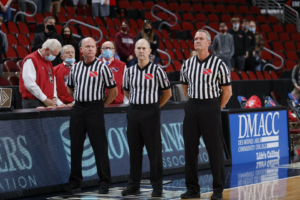

Across youth, high school and amateur sports, the shortage of referees and officials has become a serious concern. According to the National Federation of State High School Associations (NFHS), roughly 50,000 officials have left high school sports between the 2018-19 and 2021-22 seasons, about a 20% drop in available officials. (Spectrum Local News) Similarly, the National Association of Sports Officials (NASO) survey found that 59% of respondents believe most new officials quit within their first 1-3 years. (Shape America)
These numbers aren’t just statistics, they translate into cancelled games, overworked officials, reduced opportunities for student-athletes, and a stressed sports ecosystem.
What’s Causing the Shortage?
Several key factors contribute to the decline in officials:
- Aging workforce & limited new recruits: Many veteran officials are retiring, while fewer young people are entering the profession. (Center on Sport Policy and Conduct)
- Low retention: New officials often leave early. NASO and other research point out that poor onboarding, limited support, and difficult game environments contribute to high drop-out rates. (Shape America)
- Hostile game-day environment: Verbal abuse, lack of respect, threats and other unsportsmanlike behavior from spectators, players and coaches are major deterrents. In one survey, more than half of officials reported fearing for their safety. (Shape America)
- Outdated tools and inefficient workflows: Many assigning systems remain manual, fragmented or built for older needs, not for today’s multi-sport, multi-venue, fast-moving youth landscape. This creates friction for both officials and assignors.
Why This Shortage Matters
When officials are scarce, these problems emerge:
- Games are postponed, delayed or cancelled because there simply aren’t enough officials to cover them. (Center on Sport Policy and Conduct)
- Remaining officials are over-worked, increasing burnout risk and reducing retention.
- Youth athletes lose development and game experience when leagues can’t operate reliably.
- Leagues struggle to recruit new officials, creating a downward spiral where fewer games + poor support = fewer new recruits.
In short: the officiating pipeline is threatened—and sports organizations across all levels must act now.
How ZebraWeb Helps Associations Bridge the Gap
While there’s no single “silver bullet,” technology and smarter processes are key elements in rebuilding the officiating ecosystem. ZebraWeb offers association-level tools that address many of the core issues:
- Free or low-cost association websites for marketing & recruitment: New officials don’t always know where to start. A dedicated website promoting officiating opportunities, eligibility, and application flows makes it easier for potential refs to “get in the door.”
- Automated onboarding workflows: Platforms help collect certifications, availability, background checks, insurance, and training status—all in one place—reducing the administrative burden for assignors and minimizing friction for new officials.
- Self-service assignment pools: Officials can view available games, set their availability, join assignment pools, and opt into shifts that fit them, helping recruit younger or part-time officials who need flexibility.
- Communication & community tools: Push notifications, mobile access, and centralized messaging keep officials informed, reduce no-shows, and build a sense of belonging. Better communication improves retention.
- Data tracking & analytics: By collecting metrics on available officials, no-show rates, new-official signups and churn, associations can spot problem areas early and adjust their workflows or recruitment campaigns accordingly.
- Professional workflow experience: When officials feel supported and when assigning is transparent, officials are more likely to stay engaged and recommend the role to others, helping grow the pipeline.
In short: ZebraWeb gives associations the tools to attract new officials, retain existing ones, and run the officiating side of their programs more effectively.
What Associations Should Do Now
If your organization is feeling the effects of the official shortage—or wants to build resilience for the future, here’s what to prioritize:
- Create a clear recruiting page and make officiating look like an accessible, flexible opportunity.
- Simplify onboarding: gather certifications, eligibility, training status and availability in one place.
- Enable self-assignment or assignment pools so new officials can jump in with fewer gate-keeping steps.
- Communicate clearly and often: pre-game reminders, mobile updates, engagement messages.
- Collect data: How many new officials applied? How many quit after one season? How many no-shows occurred?
- Recognize officials: reward retention, highlight success stories, build community culture.
- Upgrade your technology: replace spreadsheets, email blasts and fragmented texting systems with a unified platform.
By executing these steps, leagues and assignors will not only fill current gaps but also build the foundation for sustainable officiating programs.
Final Thoughts
The shortage of referees and officials is real and urgent: tens of thousands of game-workers have left the industry, and the remaining pool is aging and stretched thin. But the solution isn’t just paying more, it’s making the job easier to access, more professional, and supported by modern workflows.
With tools like ZebraWeb, associations have a special opportunity to rebuild the officiating pipeline from the ground up—making recruiting smoother, onboarding faster, and retention higher. The game can only go on when there are people ready and willing to officiate. The time to act is now.